Hossein Daraei

Hossein is a Staff Research Engineer at Magic Leap, working on Neural 3D Reconstruction and Sensor Simulation for XR / Wearable AI, as part of Magic Leap's ongoing partnership with Google on Android XR. Prior to this, he spent four years as a Research Scientist at Meta Reality Labs, building physically-based sensor simulation frameworks, neural 3D eye surface reconstruction pipelines, and kilohertz-rate event-camera eye tracking systems for next-generation AR/VR hardware. A recurring theme across both roles is developing simulation engines that generate synthetic training data for vision AI running on resource-constrained wearable devices. Specializes in NeRF, Gaussian Splatting, and Neural SDF methods, grounded in classical multi-view geometry, structure-from-motion, and bundle adjustment from a PhD on tightly-coupled LiDAR–camera fusion.

Timeline & Projects

Magic Leap
Magic Leap Inc. in partnership with Google
Staff Research Engineer, 3D Reconstruction & Spatial AI  ·  Remote
January 2023 – Present
2024

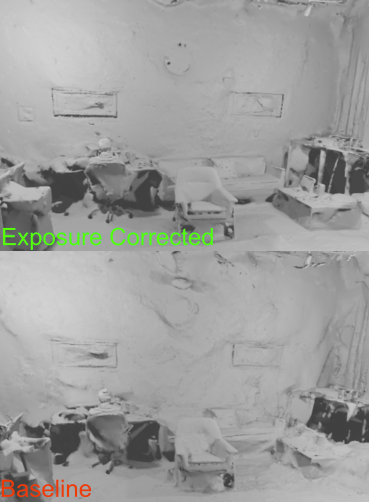
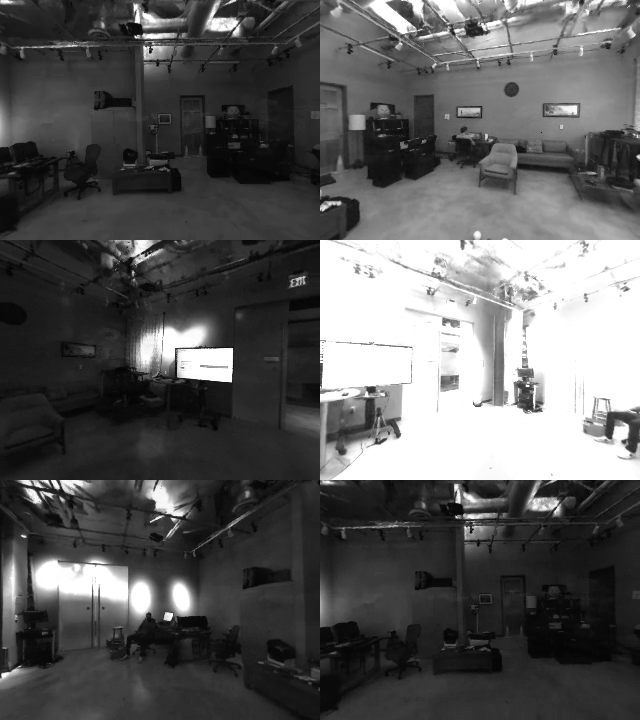
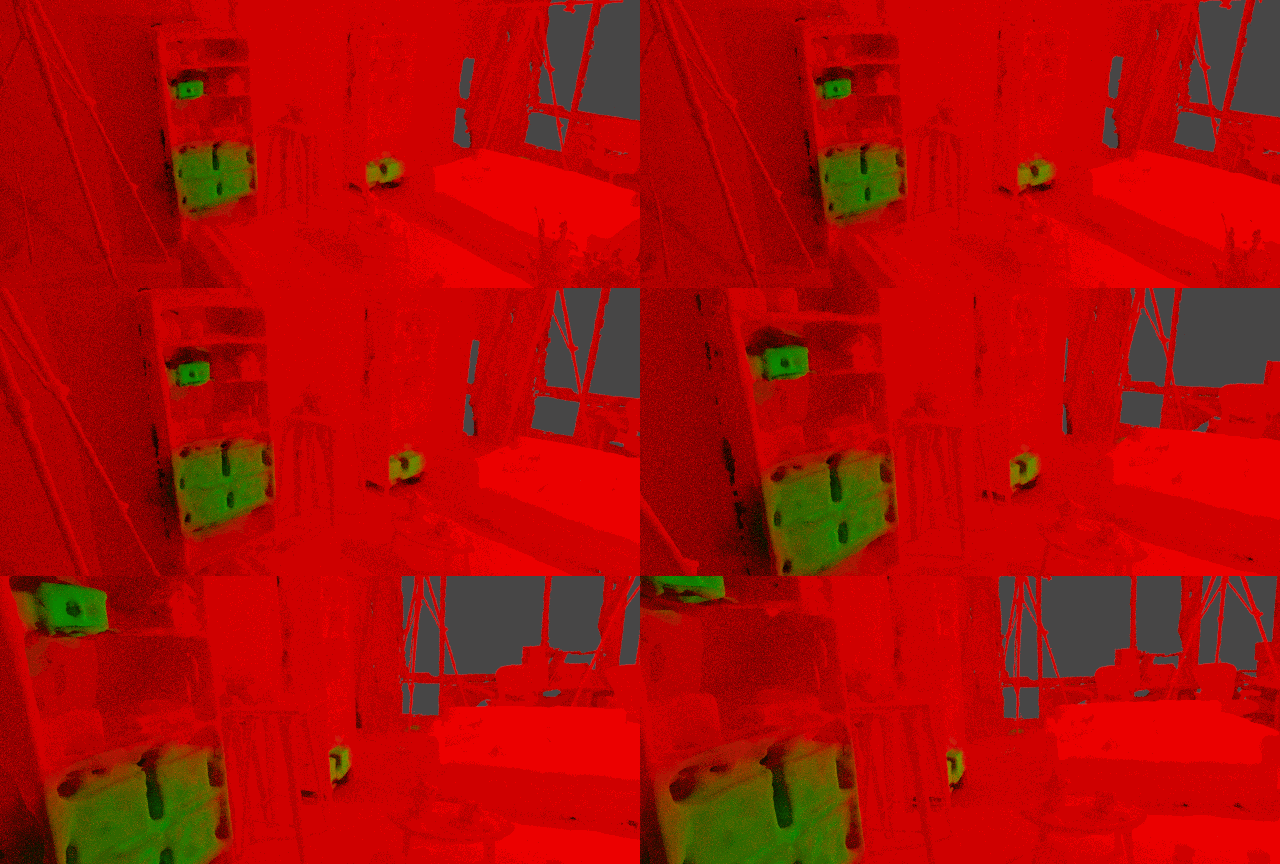
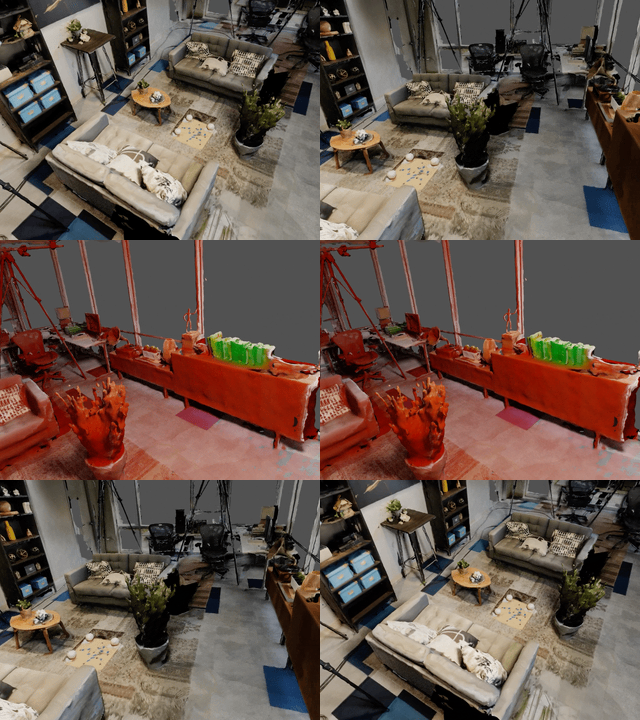
Exposure & Metadata-Corrected NeRF and 3DGS-based Mesh Extraction

Before/after exposure correction — NeRF mesh quality Exposure-corrected 3DGS reconstruction

Integrated per-frame camera exposure, gain, and white-balance metadata into NeRF and 3DGS training loops to correct for photometric inconsistencies across multi-exposure captures. Implemented learned per-image appearance embeddings and HDR-aware loss terms that suppress floater artifacts caused by exposure-bracketed sequences. Applied to XR headset capture pipelines where auto-exposure creates large inter-frame intensity swings, significantly improving mesh extraction quality evaluated against LiDAR ground truth.

NeRF3DGS HDR-Aware RenderingExposure Correction Mesh ExtractionCamera Metadata NerfstudioXR Headset
2024

Open-Vocabulary 3D Semantics — CLIP / DINOv2

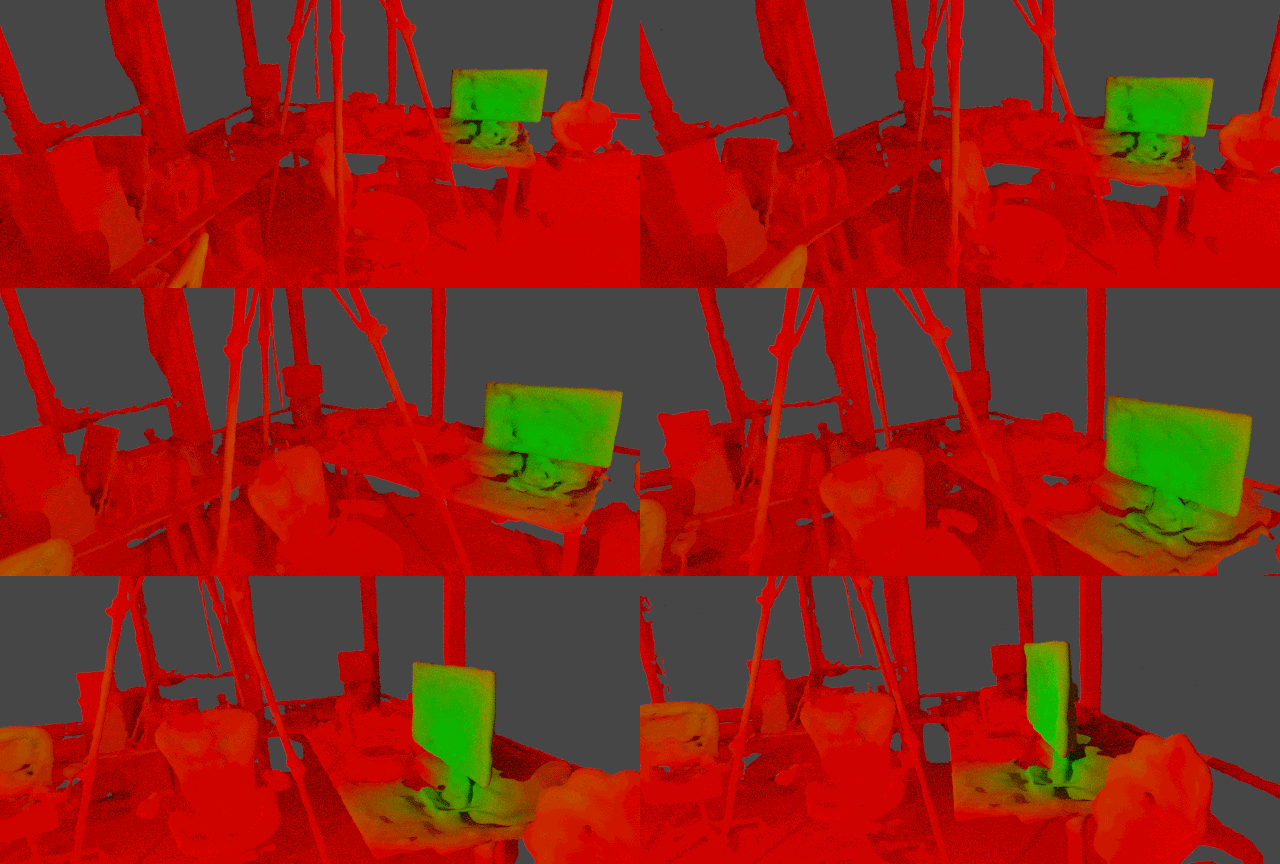
Point cloud monitor view — open-vocabulary 3D semantics Semantic bounding box query — 3D region highlight
Semantic mesh — CLIP DINOv2 XR semantics

Integrated CLIP and DINOv2 features into live XR headset reconstructions, enabling natural-language spatial queries — text prompt → highlighted 3D region — without additional annotations or fine-tuning. Feature vectors were baked directly into reconstructed mesh vertices for on-device query latency. Demonstrated on a live XR headset demo with voice-based queries over pre-reconstructed indoor scenes.

CLIP DINOv2Open-Vocabulary 3D Mesh Feature BakingNeRF 3DGSXR Headset
2023 – 2024

Block-wise NeRF for Large Indoor Mesh Reconstruction

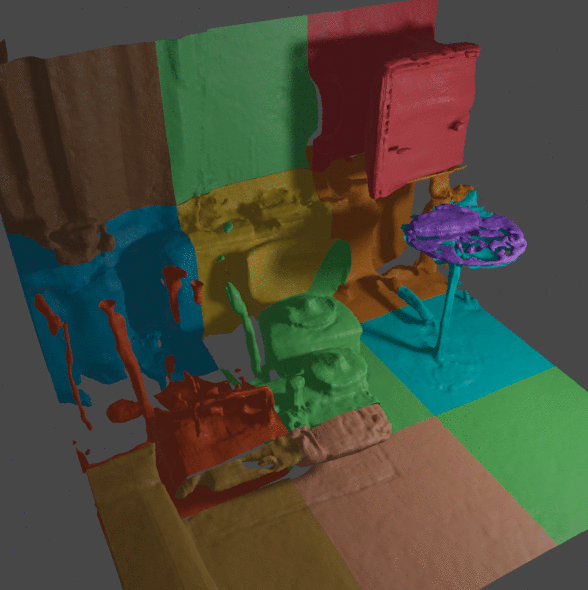
Block-wise NeRF — multi-colour block segmentation Block-wise NeRF — multi-room render flythrough

Designed and implemented a block-wise NeRF pipeline for reconstructing large multi-room indoor scenes that exceed the capacity of a single neural radiance field model. The scene was partitioned into spatially overlapping blocks with shared margin regions to ensure seamless boundary continuity at block interfaces. Each block was independently optimized; the resulting per-block meshes were stitched into a unified watertight surface mesh using a boundary-aware merging strategy. Targeted XR headset capture scenarios with RGB-D input and LiDAR-based quality evaluation across scenes spanning tens of meters.

NeRFBlock-wise Reconstruction Large-scale 3DMesh Stitching Overlapping Spatial BlocksRGB-D XR HeadsetLiDAR Evaluation
2023 – 2024

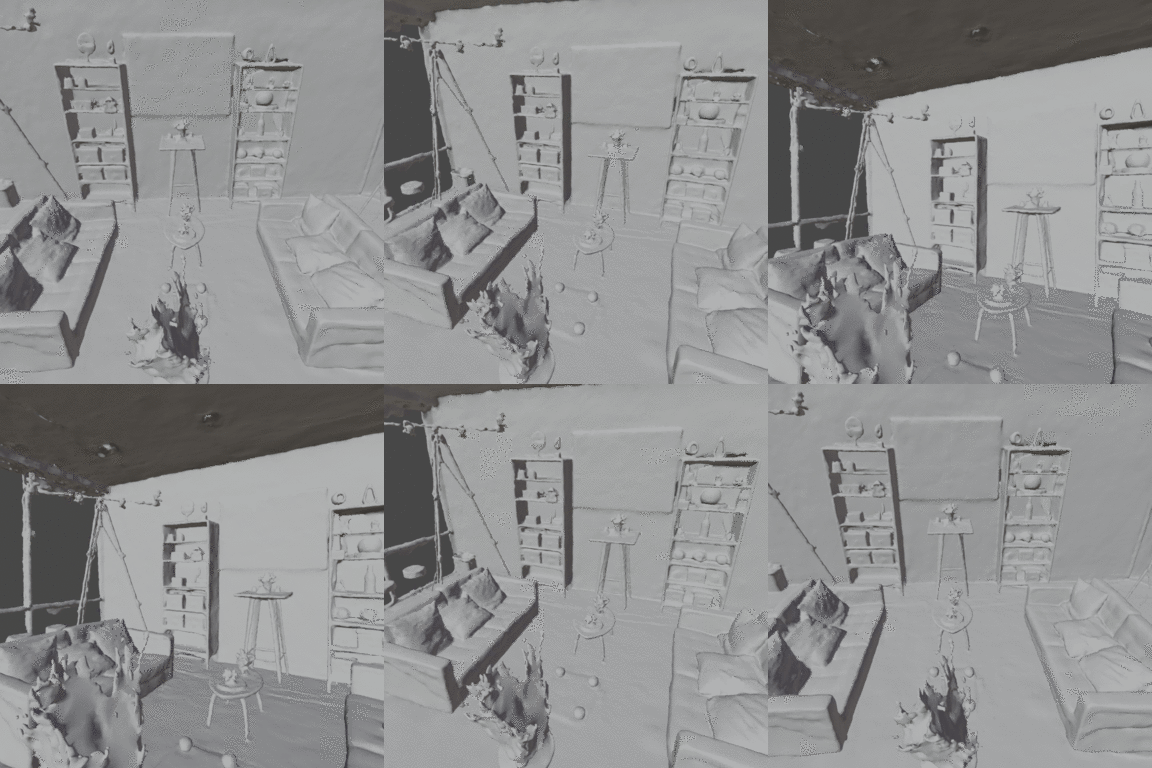
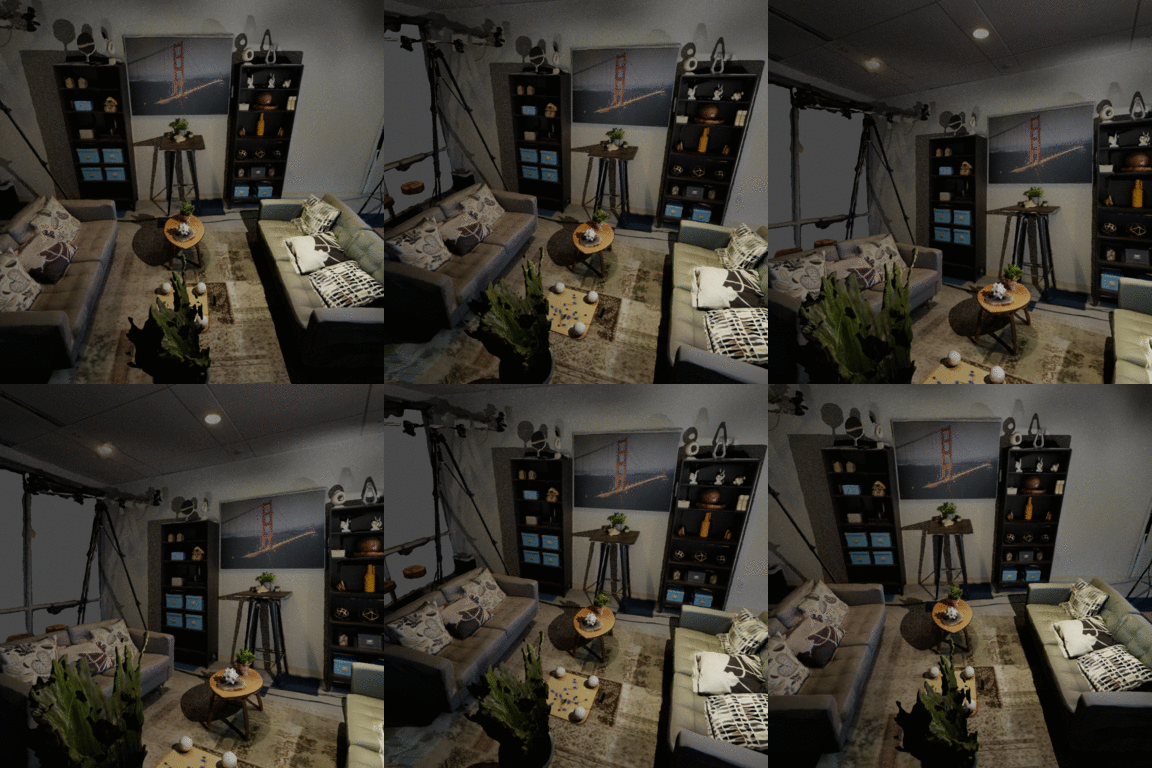
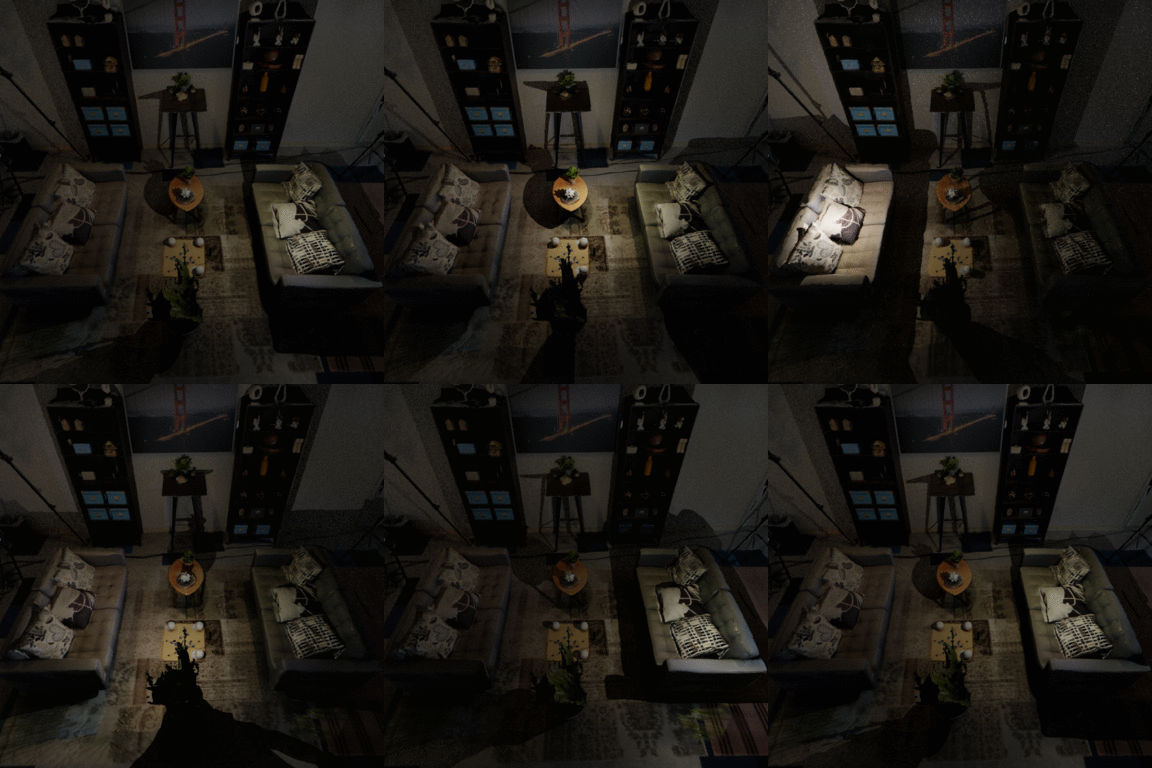
Indoor Neural SDF & Gaussian Splatting Reconstruction Pipeline

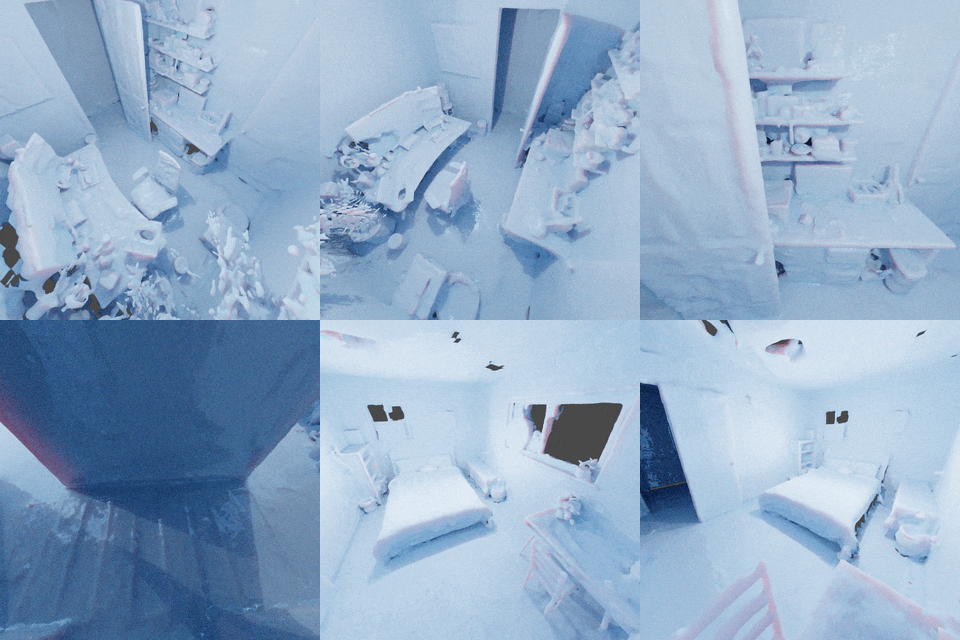
Neural SDF mesh reconstruction — indoor XR scene Object-level Gaussian Splatting reconstruction Moving light NeRF — dynamic lighting capture

Led a 5-person team adapting Neural SDF methods for room-scale XR scenes on RGB-D data within Nerfstudio and Sdfstudio — evaluating and extending Neuralangelo, NeuS, MonoSDF, and VolSDF. Integrated depth priors, surface normal priors, and HDR-aware priors derived from camera metadata (exposure, gain) into both NeRF and Gaussian Splatting variants (SuGaR, 2DGS, Gaussian Opacity Fields). Achieved <4 cm Chamfer distance against LiDAR ground truth in 60-second reconstructions of 7×7 m scenes. Also applied feed-forward 3D foundation models (DUSt3R, MASt3R, Spann3R) to live XR headset camera streams — replacing per-scene NeRF optimization with a single forward pass yielding metric-scale dense point clouds, fused with depth sensor data to fill hardware blind spots on dark or specular surfaces.

NeuralangeloNeuS MonoSDFVolSDF SuGaR2DGS Gaussian Opacity FieldsNeRF NerfstudioSdfstudioNerfacto RGB-D3DGS Omnidata PriorsMono Depth Priors DUSt3RMASt3R Spann3R Feed-Forward 3DDepth Sensor Fusion
Meta
Meta Inc., Reality Labs Research (Oculus Research)
Research Scientist, Eye Tracking & Computational Perception  ·  Redmond, WA
January 2018 – January 2022
2020 – 2022

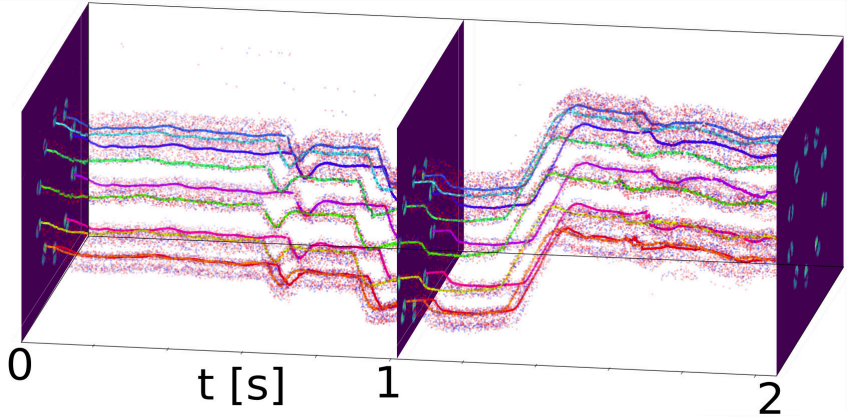
Event-Based Kilohertz Eye Tracking using Coded Differential Lighting

WACV 2022·58 citations·PDF ↗
Event camera capturing eye movements — WACV 2022 Kilohertz gaze trace visualization — WACV 2022

Proposed and co-authored a novel eye tracking method using event cameras (Prophesee) and coded differential illumination, achieving kilohertz-rate gaze estimation — orders of magnitude faster than frame-based trackers. The method was concurrently patented as US 11,176,367 (event-camera eye surface mapping, 12 citations) and US 11,853,473 (differential illumination for corneal glint detection, 6 citations).

Event Cameras (Prophesee)Coded Differential Illumination Kilohertz Eye TrackingEye Anatomy Segmentation Embedded XRWACV 2022
2019 – 2022

3D Eye Surface Reconstruction — NeRF with Corneal Geometry

Foundational contribution · arXiv 2503.16742·Paper ↗
Eye anatomy segmentation mask — iris, sclera, cornea 3D eye surface NeRF reconstruction with corneal geometry

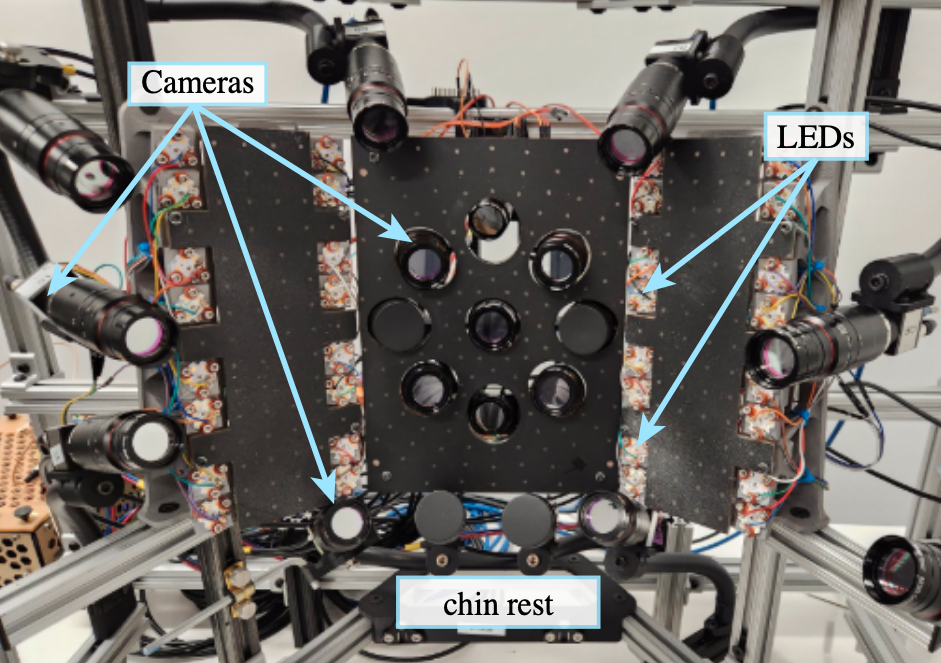
Reconstructed photorealistic 3D eye surface geometry — iris, sclera, and the transparent, refractive cornea — from multi-camera near-infrared light-dome captures using NeRF. The corneal surface is invisible to standard photogrammetry; specialized modeling of its specular and refractive properties recovered the 3D geometry that generates NIR glints. The resulting eye model served as the substrate for all downstream sensor simulation work. Former colleagues subsequently published this pipeline as arXiv:2503.16742 (Lin et al., 2025); the work is now fully public and describes the infrastructure built during my Meta tenure prior to my departure.

NeRFCornea Modeling Specular / Refractive GeometryNIR Multi-View Capture Light Dome Capture Rig3D Eye Reconstruction
2019 – 2022

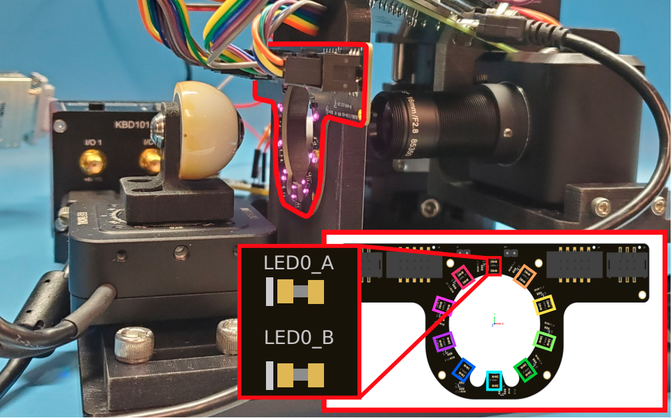
Physically-Based Sensor Simulation Framework

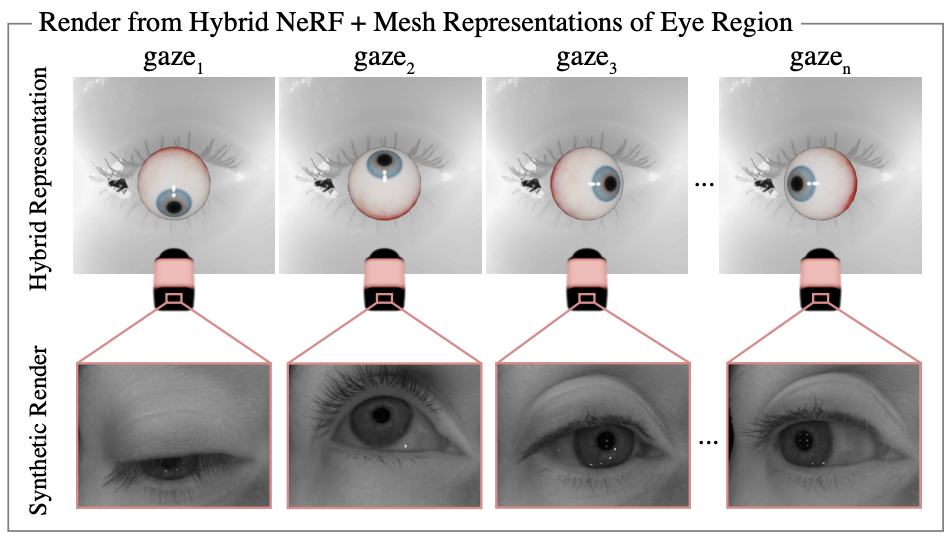
Physically-based synthetic sensor simulation — eye tracker hardware design

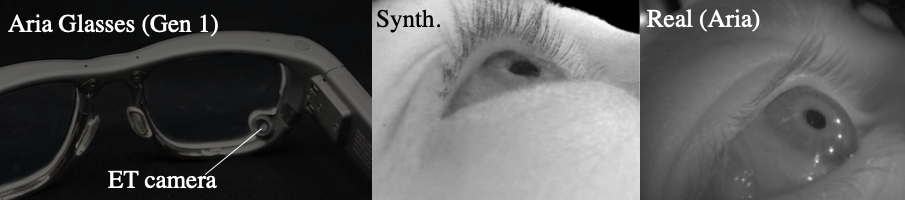
Built a sensor simulation framework over reconstructed 3D eye models, enabling virtual placement of cameras, photodiodes, fringe projectors, and OCT systems at arbitrary positions and predicting their real-world response from first principles — ray-traced radiance, spectral sensitivity, shot noise, and dark current. Supported systematic hardware design-space exploration: evaluating dozens of LED arrangements and camera placements in simulation before committing to physical manufacture. Calibrated simulation-to-real gaps via bundle adjustment over anthropomorphic phantoms in Ceres Solver, jointly optimizing sensor parameters and 3D geometry.

Physically-Based RenderingMitsuba OptiXPhotodiode Simulation Fringe ProjectorsOCT Bundle AdjustmentCeres Solver Sim-to-Real Calibration
UC Santa Cruz
University of California, Santa Cruz
Ph.D. in Electrical Engineering  ·  Advisor: Roberto Manduchi
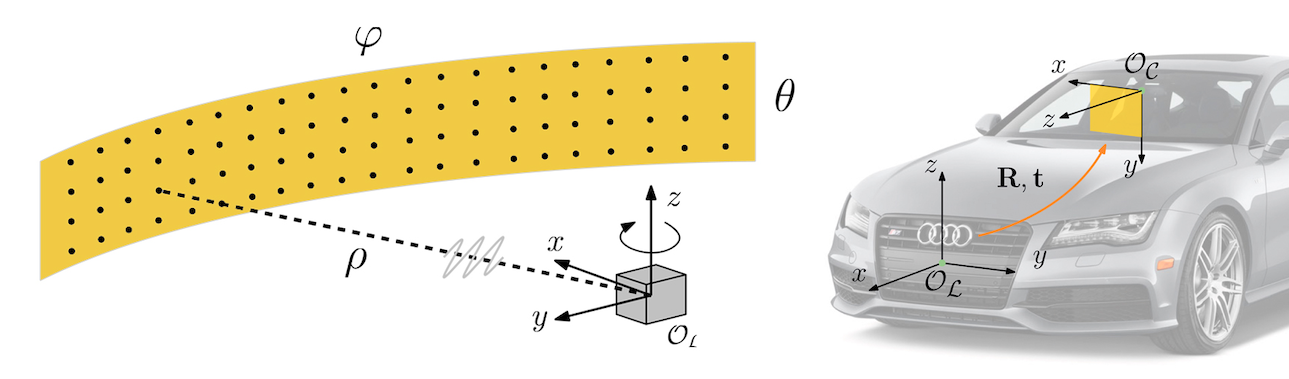
Tightly-Coupled LiDAR and Camera for Autonomous Driving
September 2014 – December 2018
2016 – 2017

Live Demo: Real-Time LiDAR–Camera Fusion Implementation on NVIDIA Jetson

PhD Thesis·PDF ↗
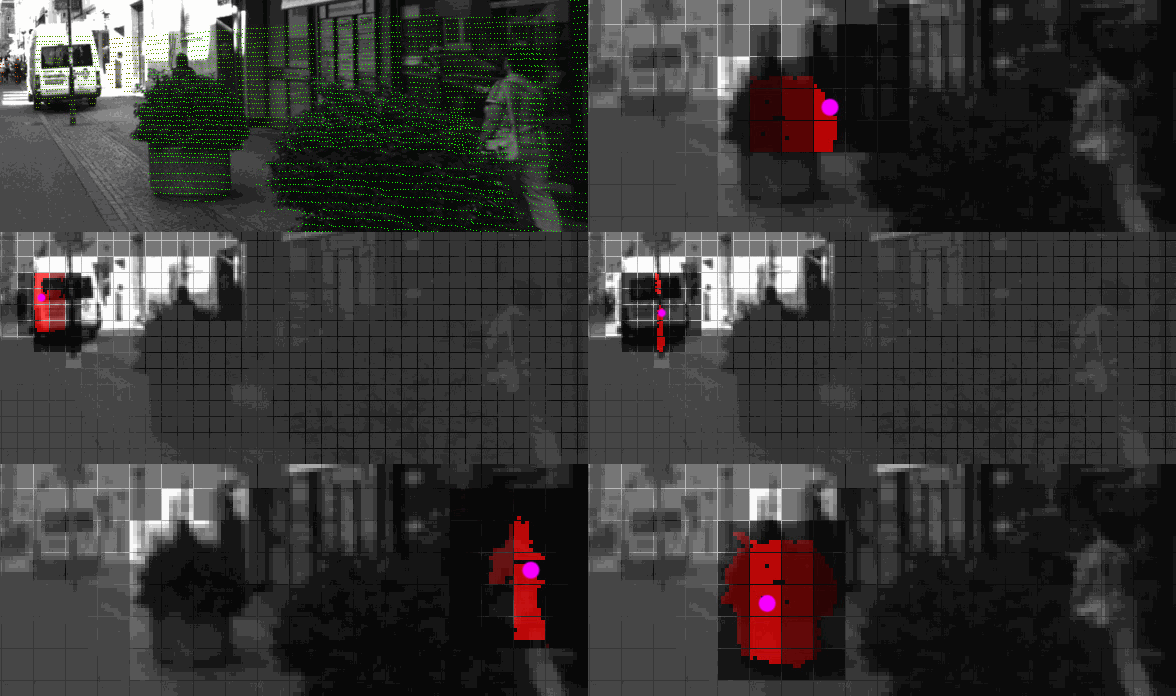
Real-time LiDAR point cloud on Jetson TK1 LiDAR–camera fusion pipeline output
Camera lane and object detection on Jetson Semantic segmentation masks — CUDA pipeline

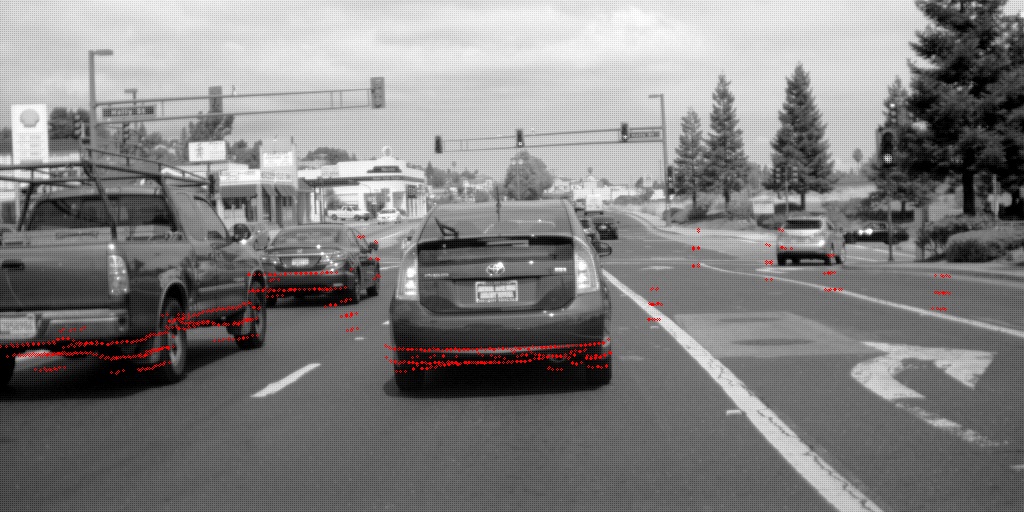
Implemented the full LiDAR–camera tightly-coupled fusion pipeline from the PhD thesis as a live real-time demo running on NVIDIA Jetson TK1 — demonstrating that the measurement-level fusion algorithm is feasible on constrained embedded hardware. Built during a Volkswagen ERL internship as a direct continuation of the UCSC dissertation work. Included CUDA-accelerated point cloud processing, feature tracking, and on-device visualization of fused depth and velocity estimates.
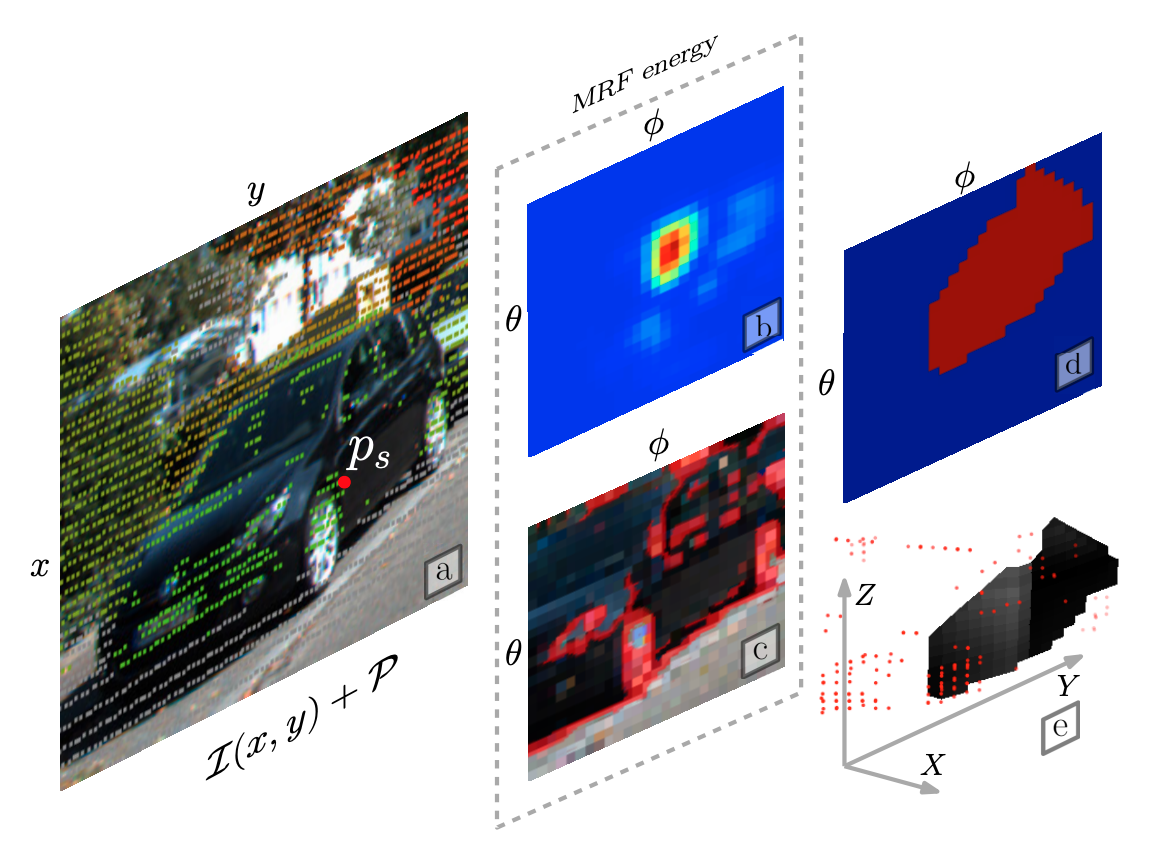
LiDAR–camera fusion pipeline diagram on NVIDIA Jetson
NVIDIA Jetson TK1CUDA LiDAR–Camera FusionReal-Time Edge DeploymentEmbedded Systems PhD Implementation
2016 – 2017

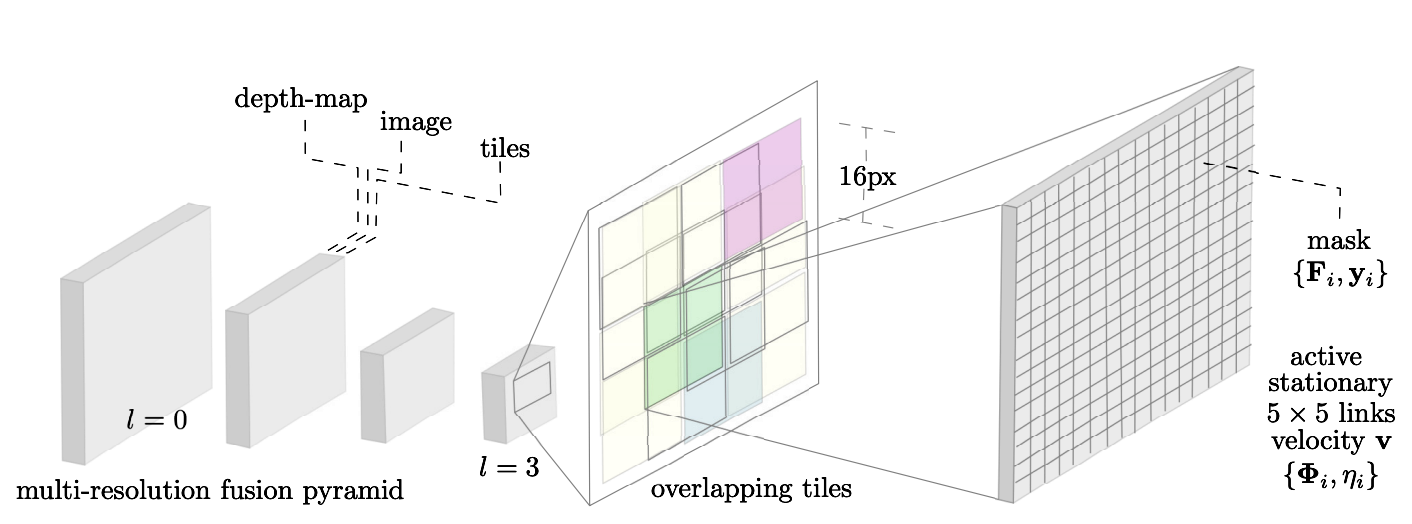
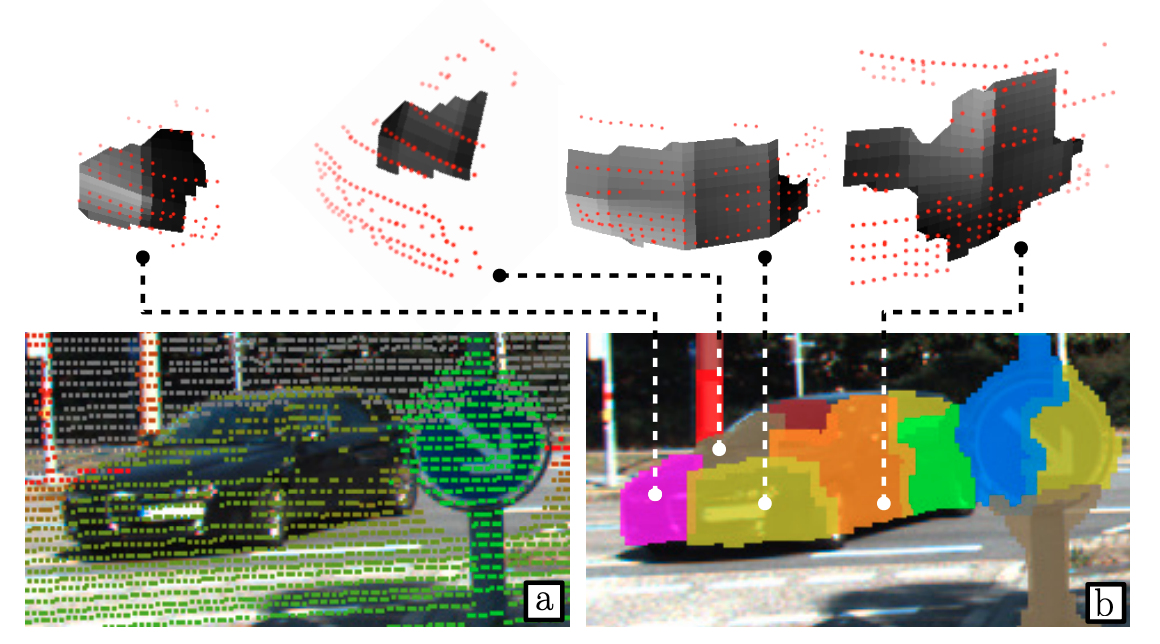
Region Segmentation Using LiDAR and Camera

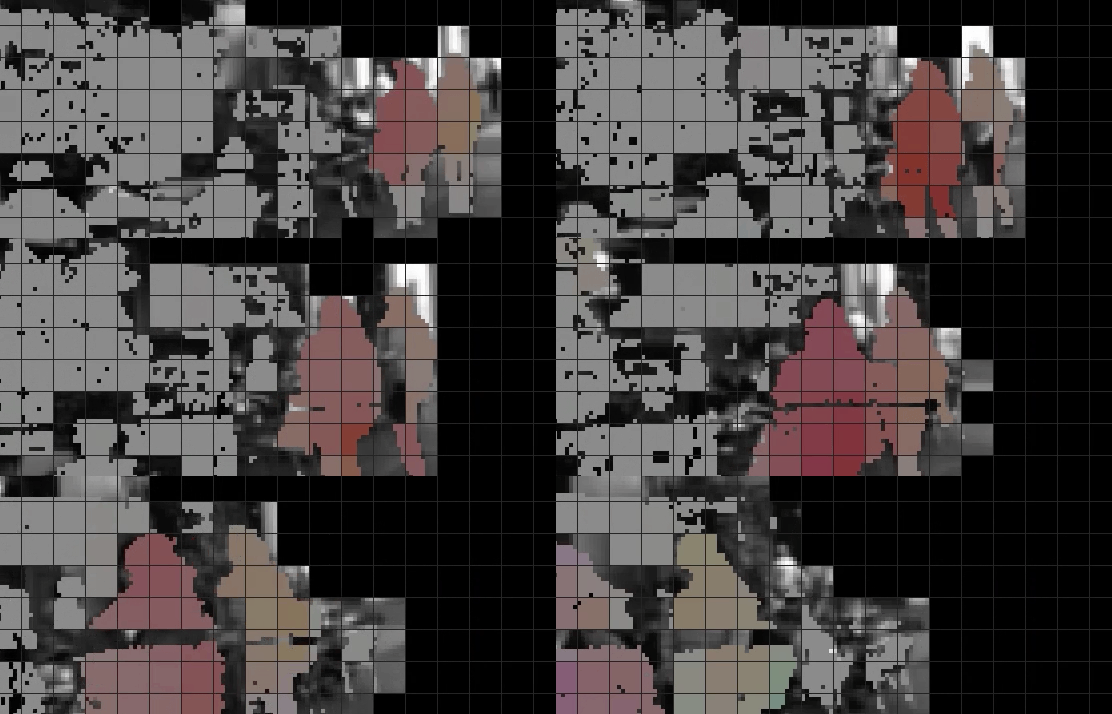
LiDAR-camera region segmentation — ITSC 2017 LiDAR-camera segmentation result — ITSC 2017

Extended the tightly-coupled LiDAR–camera fusion framework from velocity estimation to full 3D shape recovery of moving objects. The joint formulation simultaneously optimizes ego-motion, object trajectory, and surface geometry — recovering metric 3D structure of vehicles in traffic from a single moving observer. Implemented using SfM, SLAM, and bundle adjustment pipelines. Published at IEEE Intelligent Transportation Systems Conference 2017; research sponsored by Volkswagen ERL.

LiDAR–Camera Fusion3D Shape Estimation SfMSLAM Bundle AdjustmentCeres Solver Autonomous DrivingIEEE ITSC 2017
2015 – 2017

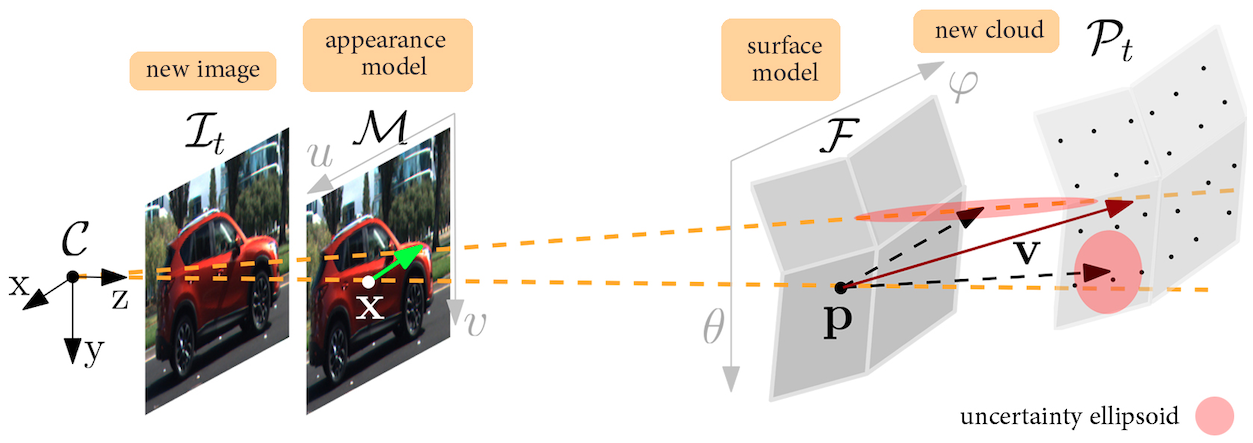
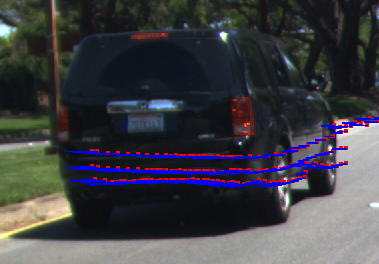
Velocity and Shape from Tightly-Coupled LiDAR and Camera

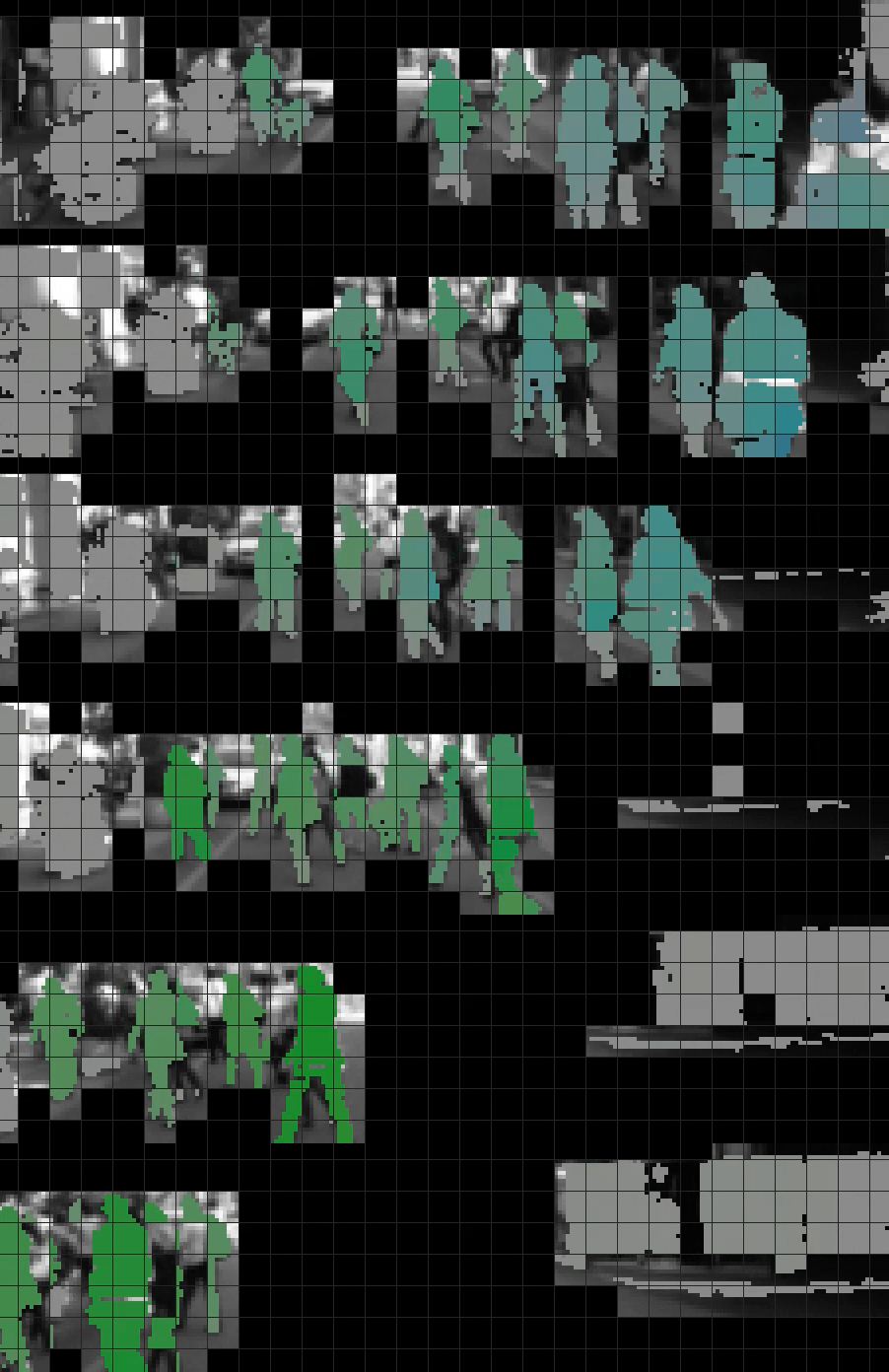
Velocity and shape estimation from tightly-coupled LiDAR–camera fusion — IV 2017

Core PhD contribution: tightly-coupled (measurement-level) fusion of spinning LiDAR and monocular camera for simultaneous velocity and 3D shape estimation of moving vehicles in autonomous driving scenes. Unlike loosely-coupled approaches that fuse detections, this method fuses raw LiDAR point correspondences and image feature tracks jointly in a bundle-adjustment framework. Achieved accurate velocity estimation without requiring explicit dynamic object segmentation. Published at IEEE Intelligent Vehicles Symposium 2017; research sponsored by Volkswagen ERL.

LiDAR–Camera FusionVelocity Estimation Bundle AdjustmentCeres Solver Multi-view GeometryAutonomous Driving IEEE IV 2017
Volkswagen
Volkswagen Group of America, Electronics Research Lab.
Research Engineer Intern, 4 summers  ·  Belmont, CA
Concurrent with PhD at UC Santa Cruz
Summers 2014 – 2017
Summer 2016

Joint Extrinsic Calibration of LiDAR and Camera using a Siamese Neural Network

Calibration sensor rig setup LiDAR–camera reprojection result

Developed a learning-based approach to the LiDAR–camera extrinsic calibration problem using a Siamese neural network that learns a joint embedding of LiDAR reflectance and camera intensity patches. The network regresses the 6-DOF rigid transform between sensor frames, eliminating the need for manual correspondences or calibration targets. Outperformed classical checkerboard-based calibration in robustness to partial observations and varying scene structure.

Extrinsic CalibrationSiamese Network LiDAR–Camera6-DOF Pose Deep LearningSensor Fusion
Summer 2015

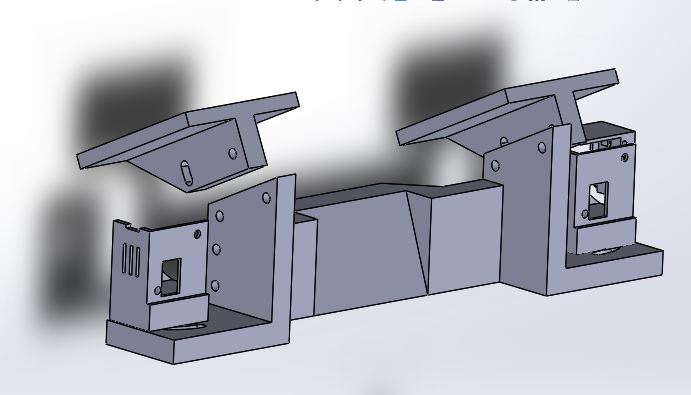
LiDAR–Camera Data Stream for In-Vehicle Measurement Integration

Valeo LiDAR point cloud stream In-vehicle camera measurement pipeline

Designed and built the hardware and software integration pipeline for the Valeo LiDAR sensor into a Volkswagen test vehicle. Designed a custom CAD model for the sensor mount and integration bracket. Built the data streaming pipeline synchronizing LiDAR point cloud acquisition with in-vehicle measurement buses (CAN), enabling time-aligned LiDAR–camera–CAN capture for autonomous driving research datasets.

Valeo LiDARCAD Design Sensor IntegrationCAN Bus Data PipelineLiDAR–Camera Sync Test Vehicle
Summer 2014

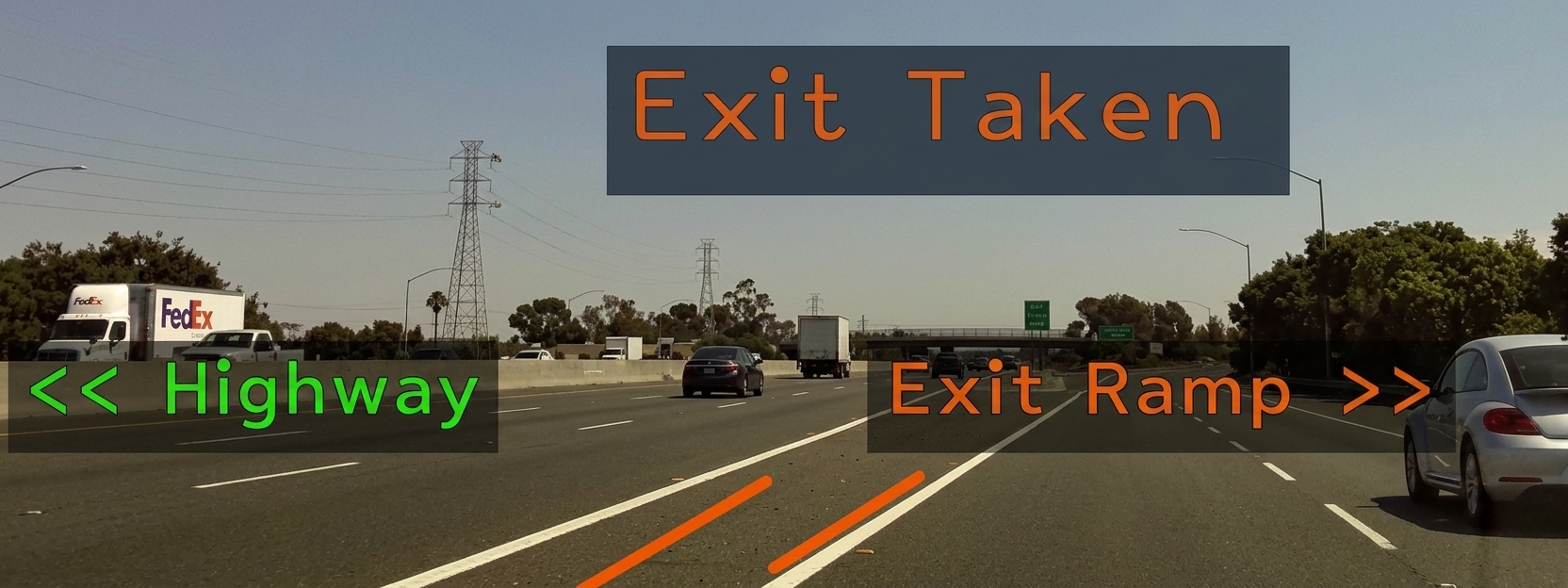
Exit-Only and Shared Lane Detection using Camera-Based Perception

Patent US 10,025,996·Google Patents ↗
Exit-only and shared lane detection output

Co-invented and implemented a camera-based lane detection system for the early identification of exit-only and shared lanes from a moving vehicle. Used monocular camera imagery to classify lane types robustly under varied lighting and occlusion conditions. Work issued as US Patent 10,025,996 (23 citations).

Lane DetectionComputer Vision ADASCamera Perception Patent US 10,025,996
UC Santa Cruz
University of California, Santa Cruz
M.Sc. in Electrical Engineering  ·  Advisor: Peyman Milanfar
Optical Flow Computation Under Spatially-Varying Motion Blur
September 2012 – June 2014
2012 – 2014

Optical Flow Under Spatially-Varying Motion Blur

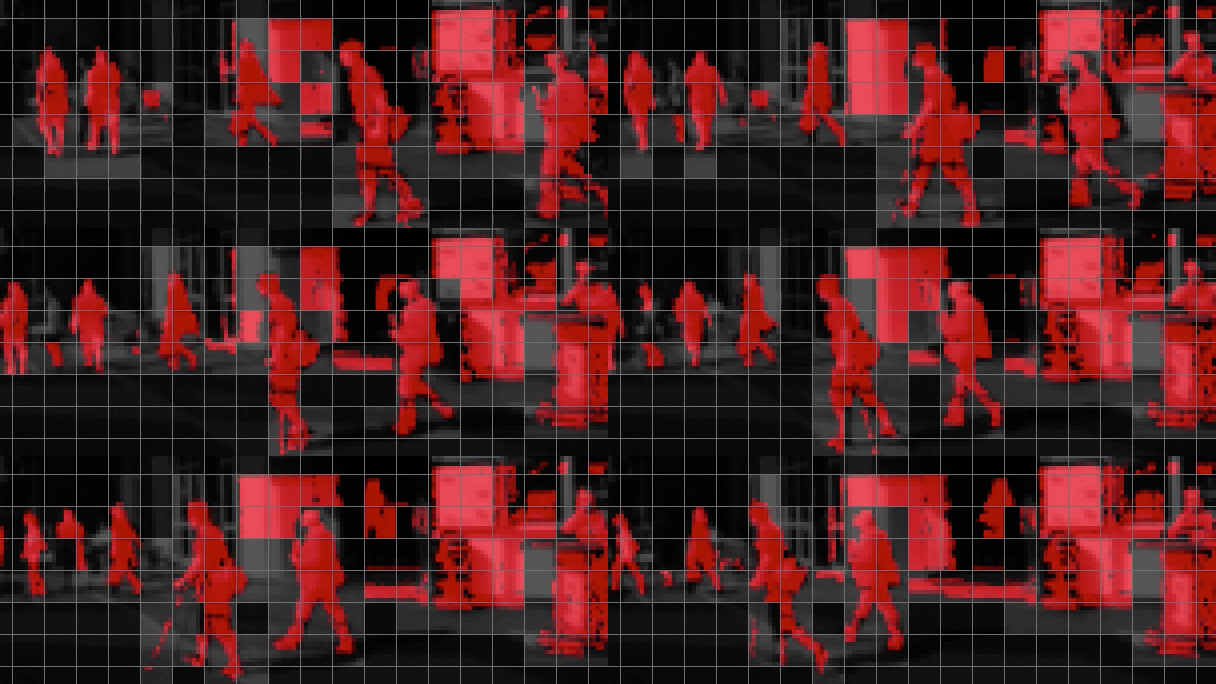
Optical flow estimation under spatially-varying motion blur

Master's thesis on estimating accurate optical flow in the presence of spatially-varying motion blur — a regime where standard flow methods fail due to the non-uniform point-spread function introduced by per-pixel motion during exposure. Developed a blur-aware flow estimator and published at the 10th International Symposium on Visual Computing (ISVC 2014). Advised by Peyman Milanfar (UCSC / Google Research).

Optical FlowMotion Blur Spatially-Varying PSFImage Processing ISVC 2014
Sharif University of Technology
B.Sc. in Electrical Engineering  ·  Tehran, Iran
2008 – 2012

Publications & Patents

Digitally Prototype Your Eye Tracker: Simulating Hardware Performance using 3D Synthetic Data
E. Y. H. Lin, Y. Ding, J. Kundu, Y. An, M. T. El-Haddad, A. Fix
arXiv:2503.16742, March 2025
Contributed Work arxiv.org/abs/2503.16742 ↗
Contributed: foundational NeRF-based 3D eye reconstruction and physically-based sensor simulation infrastructure built during my Meta tenure, prior to publication.
Event-Based Kilohertz Eye Tracking using Coded Differential Lighting
T. Stoffregen, M. H. Daraei, C. Robinson, A. Fix
IEEE/CVF Winter Conference on Applications of Computer Vision (WACV), January 2022
58 citations Paper PDF ↗
Region Segmentation Using LiDAR and Camera
M. H. Daraei, A. Vu, R. Manduchi
IEEE Intelligent Transportation Systems Conference (ITSC), October 2017
Velocity and Shape from Tightly-Coupled LiDAR and Camera
M. H. Daraei, A. Vu, R. Manduchi
IEEE Intelligent Vehicles (IV) Symposium, June 2017
Optical Flow Computation in the Presence of Spatially-Varying Motion Blur
M. H. Daraei
10th International Symposium on Visual Computing (ISVC 2014), Las Vegas, NV, December 2014

View on Google Scholar ↗

Patents

10 granted or pending US patents in XR sensing, eye tracking, and autonomous vehicle perception — nine from Meta Reality Labs (2021–2025), one from Volkswagen ERL.